
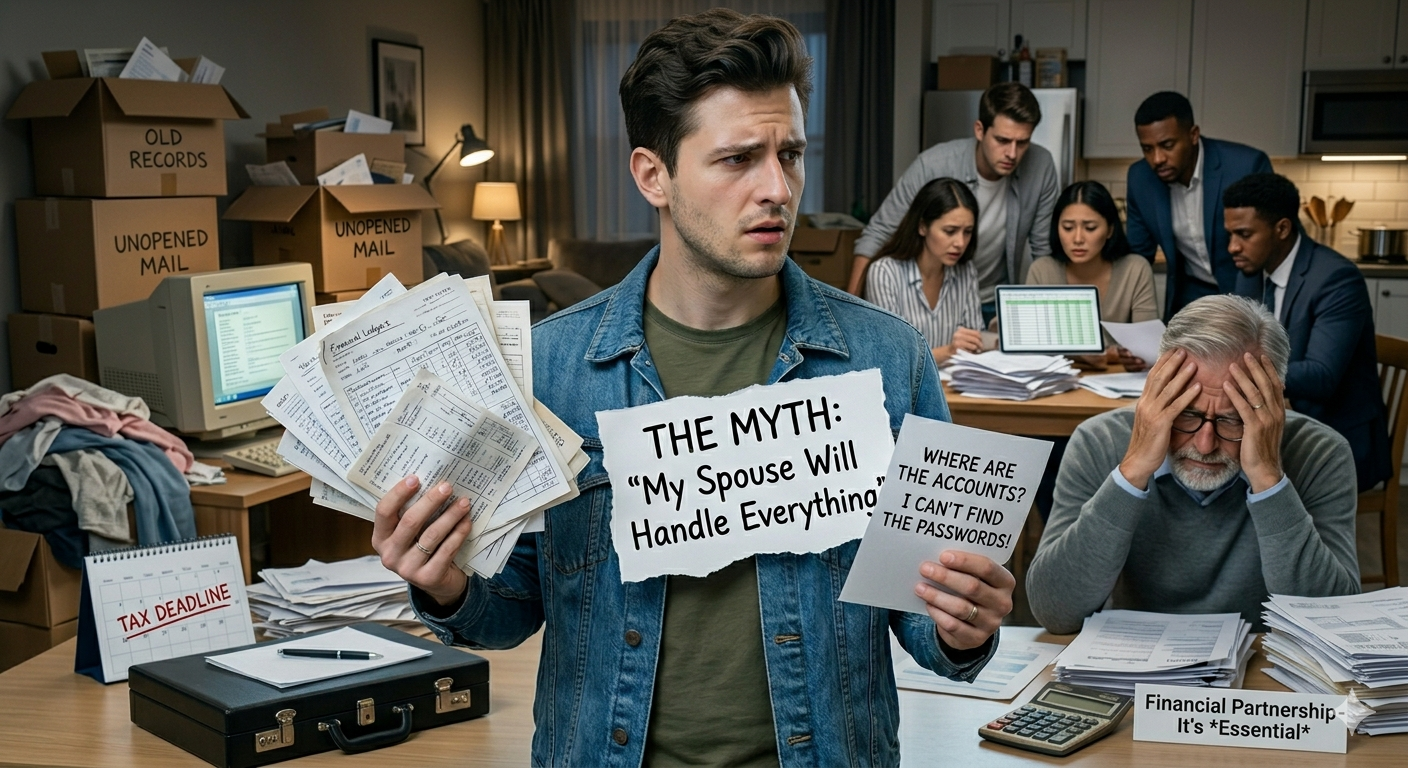
The Assumption Many Couples Make
One of the most common beliefs in the UK is this:
“If something happens to me, my wife or husband will automatically be able to handle everything.”
It sounds logical.
It feels natural.
And most couples never question it.
But legally, that assumption can become a serious problem if one partner loses mental capacity.
Many people are shocked to discover that being married does not automatically give a spouse the legal authority to manage finances or make important decisions on their behalf.
Without a Lasting Power of Attorney (LPA), even the closest relationships can face major legal and financial obstacles.
What Happens If Mental Capacity Is Lost?
Mental capacity can be lost suddenly and unexpectedly.
This may happen because of:
- A stroke
- Dementia
- A serious accident
- A brain injury
- Illness
- Mental health conditions
When this happens, banks, medical professionals, and financial institutions cannot simply take a spouse’s word for it — even if they have been married for decades.
The law requires legal authority.
And without an LPA, that authority may not exist.
Even Joint Bank Accounts Can Become Complicated
Many married couples assume that joint accounts solve everything.
Unfortunately, this is not always true.
If one account holder loses mental capacity, banks may place restrictions on accounts while they assess the legal situation.
This can create serious difficulties with:
- Paying household bills
- Accessing savings
- Managing mortgage payments
- Running family finances
- Handling business transactions
For the healthy spouse, this often comes as a huge emotional shock during an already stressful time.
Imagine trying to care for your partner while also struggling to access money needed for everyday living.
This situation happens more often than people realise.
Medical Decisions Are Not Automatically Guaranteed Either

Another common misconception is that spouses automatically have the right to make healthcare decisions.
In reality, medical professionals must follow strict legal rules around consent and mental capacity.
Without the proper legal documentation in place, decision-making can become more complicated than families expect.
An LPA for Health and Welfare allows you to formally appoint someone you trust to help make decisions if you become unable to make them yourself.
Without one, loved ones may feel powerless during deeply emotional situations.
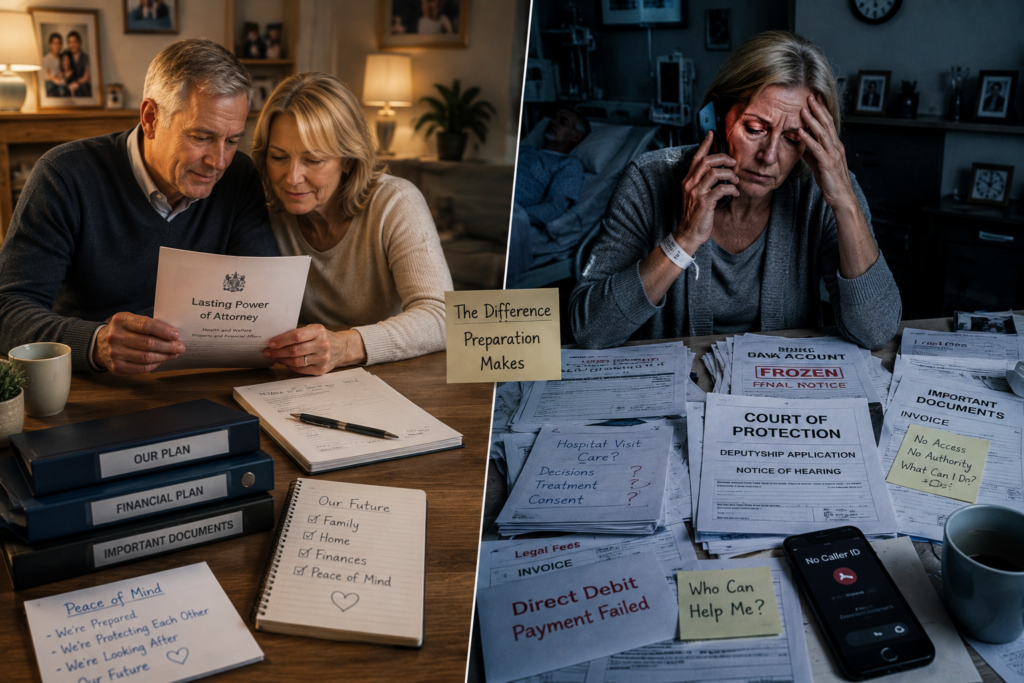
The Court of Protection Nightmare
If no LPA exists and mental capacity has already been lost, families may need to apply to the Court of Protection for something called deputyship.
This is where the situation can become incredibly stressful.
Instead of you choosing who manages your affairs:
A court decides.
The process can involve:
- Lengthy applications
- Court fees
- Ongoing supervision
- Financial reporting requirements
- Delays lasting months
- Additional legal costs
During this time, families are often left dealing with uncertainty, frustration, and emotional exhaustion.
In some cases, disagreements between relatives can also arise over who should take control.
Many spouses are stunned to discover they cannot simply step in automatically.
Why an LPA Changes Everything
A Lasting Power of Attorney allows you to choose:
- Who can help manage your finances
- Who can support healthcare decisions
- How your affairs should be handled
- Who you trust most
Most importantly, it gives clarity before a crisis happens.
Rather than leaving your family to navigate court systems during an emergency, an LPA creates a clear legal framework that protects everyone involved.
It removes uncertainty at the very moment stability matters most.
Planning Ahead Is an Act of Protection

Many couples avoid conversations about LPAs because they associate them with ageing or illness.
But LPAs are not about expecting something bad to happen.
They are about protecting each other if life takes an unexpected turn.
The truth is simple:
You cannot arrange an LPA after mental capacity has already been lost.
By then, the opportunity has gone.
That is why planning early matters.
Final Thoughts
The belief that “my spouse will handle everything” is one of the most dangerous myths in estate planning.
Marriage alone does not automatically provide legal authority over finances or healthcare decisions when mental capacity is lost.
Without an LPA, even loving spouses can face delays, legal complications, frozen accounts, and stressful court involvement during already painful times.
A Lasting Power of Attorney is not just a legal document.
It is peace of mind.
It is protection.
And it is one of the most important ways couples can protect each other for the future.
Because when life changes unexpectedly, clarity matters.