LPAs Aren’t Just for the Elderly: Why Every Adult Over 18 Needs a Plan

When most people hear the term Lasting Power of Attorney (LPA), they often picture someone elderly or living with dementia.
As a result, many younger adults assume it is something to think about “later in life.”
But that belief can be a dangerous mistake.
The reality is that a Lasting Power of Attorney is not about age — it is about preparation.
Because illness, accidents, and unexpected life events do not wait until retirement.
The Biggest Misunderstanding About LPAs
One of the most common myths in the UK is that LPAs are only necessary for older people.
In truth, every adult over 18 should consider having one in place.
Why?
Because the ability to make decisions for yourself can be lost suddenly and unexpectedly.
This could happen due to:
- A serious car accident
- A stroke
- A brain injury
- A sudden illness
- Mental health crises
- Complications during surgery
- Conditions affecting mental capacity
Many of these situations can happen without warning — even to healthy young adults.
And if you lose mental capacity without an LPA in place, your loved ones may not automatically be able to step in and help.
The Car Insurance Comparison
Think of a Lasting Power of Attorney like car insurance.
You hope you never need it.
But you cannot arrange it after the crash has already happened.
An LPA must be created while you still have mental capacity.
Once capacity is lost, it becomes too late to sign one.
At that point, your family may face a far more difficult, stressful, and expensive process through the Court of Protection.
This is why delaying an LPA can create serious risks — regardless of your age.
What Happens If There’s No LPA?
Many people assume their spouse, parents, or children could automatically manage things for them if something happened.
Unfortunately, that is not how the law works in the UK.
Without a valid LPA:
- Family members may struggle to access bank accounts
- Bills and mortgages may go unpaid
- Important financial decisions may be delayed
- Medical and care decisions may become more complicated
- Loved ones may need court approval before acting
Even married couples do not automatically gain legal authority to manage each other’s affairs.
This often comes as a major shock to families during already emotional situations.
The Emotional Impact on Families
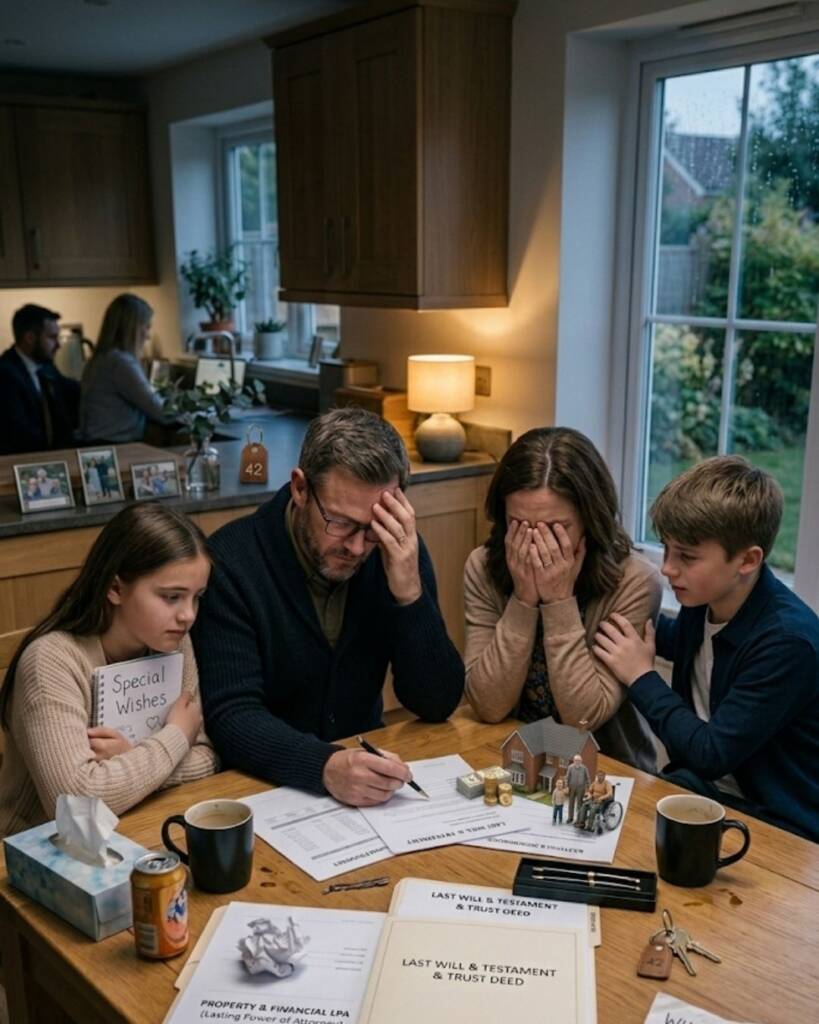
Losing the ability to communicate or make decisions can be incredibly distressing — not only for the individual, but for the people around them.
Without an LPA in place, families are often left:
- Feeling powerless
- Facing legal uncertainty
- Dealing with court paperwork
- Waiting months for authority to act
- Managing additional emotional stress during a crisis
At a time when loved ones should focus on support and recovery, they can instead become trapped in legal complications.
An LPA helps reduce uncertainty and provides clarity when it matters most.
LPA vs. Deputyship: The Cost Difference
One of the strongest reasons to arrange an LPA early is the financial difference compared to deputyship.
Lasting Power of Attorney (LPA)
Creating an LPA is usually:
- Faster
- Simpler
- Far less stressful
- Much more affordable
You choose who will act for you and clearly outline your wishes in advance.
Deputyship Through the Court of Protection
If capacity is already lost and no LPA exists, loved ones may need to apply for deputyship.
This process is often:
- Significantly more expensive
- Time-consuming
- Emotionally draining
- Subject to ongoing court supervision
There may also be:
- Application fees
- Annual supervision fees
- Solicitor costs
- Delays lasting several months
Most importantly, the court decides who is appointed — not you.
Having an LPA Is About Control
A Lasting Power of Attorney allows you to decide:
- Who you trust to help you
- How decisions should be handled
- What your wishes are
- How your finances and wellbeing are protected
Without one, those decisions may be left to the courts.
Creating an LPA is not pessimistic.
It is responsible planning.
You Don’t Need to Be Wealthy or Elderly

Many younger adults delay LPAs because they believe they do not own enough assets to justify one.
But LPAs are not only about wealth.
They protect your ability to manage:
- Bank accounts
- Rent or mortgage payments
- Employment matters
- Medical decisions
- Everyday financial responsibilities
- Even at 18, losing capacity unexpectedly could create serious difficulties for the people trying to help you.
Final Thoughts
The “too young” mindset causes many people to postpone planning they may one day desperately need.
A Lasting Power of Attorney is not just for retirement.
It is for adulthood.
Because life is unpredictable — and once mental capacity is lost, the opportunity to put protection in place may disappear with it.
Planning ahead today could save your loved ones enormous emotional, legal, and financial stress tomorrow.
You insure your car before the accident.
An LPA works the same way.
Protect your future while you still have the ability to choose.