A Will isn’t something you write once and forget. It should evolve with your life. If it doesn’t, there’s a risk it no longer reflects your wishes — which can lead to confusion, disputes, or unintended inheritance outcomes.
As a general rule, you should review your Will every 3–5 years, even if nothing major has changed. But more importantly, you should update it immediately after certain life events.

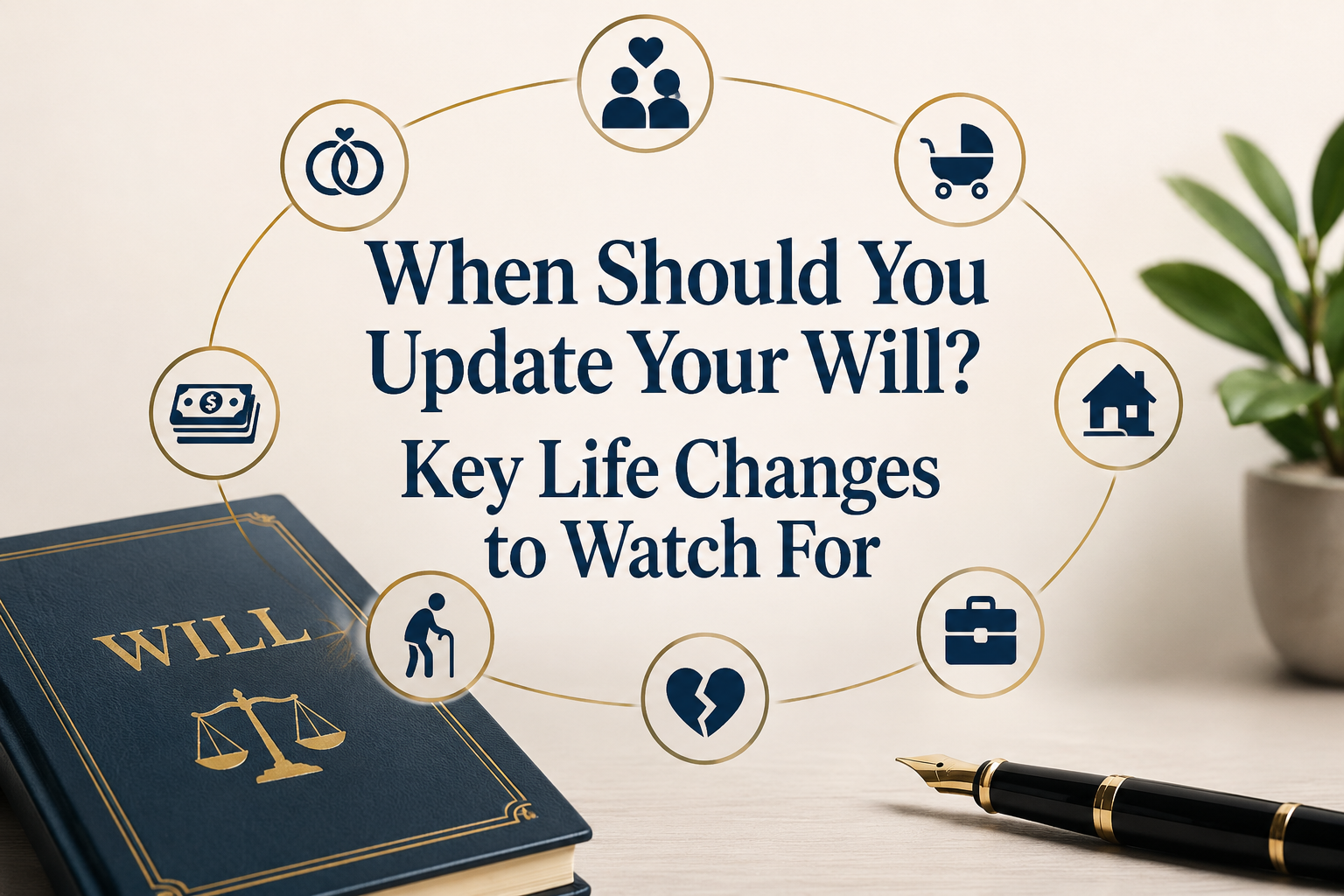
Here are the key moments when updating your Will becomes essential:
1. Marriage or Civil Partnership
Getting married or entering a civil partnership can automatically invalidate a previous Will in many cases, meaning your estate may be treated as if you never made one.
If your relationship status changes, your Will should be reviewed straight away.
2. Separation or Divorce
A separation or divorce can significantly affect who benefits from your estate. In some cases, your ex-partner may still be named in your Will unless you update it.
This is one of the most important triggers for a review.
3. Having Children or Grandchildren
When your family grows, your Will should reflect:
- Guardianship arrangements
- Inheritance plans for children
- Trusts for minors (if needed)
Failing to update this can leave key decisions to the courts instead of you.
4. Buying or Selling Property or Major Assets
If you purchase a home, sell a business, or acquire valuable assets, your estate plan may no longer match what you actually own.
A Will should always reflect your current financial situation, not an outdated snapshot.
5. Death or Change of Executors or Beneficiaries
If someone named in your Will (executor, guardian, or beneficiary) dies or can no longer act, your Will should be updated to avoid legal complications.
6. Significant Financial Changes
Big changes in wealth — such as inheritance, investments, or business growth — may require restructuring your Will or estate planning approach.
This can also affect tax planning and distribution strategies.
7. Moving Home or Changing Country
Relocating, especially internationally, can affect how your Will is interpreted legally. In some cases, a completely new Will may be needed.
8. Changes in Personal Wishes or Relationships
Sometimes changes aren’t legal or financial — they’re personal:
Falling out with someone named in your Will
Wanting to include new people
Changing funeral wishes or donations
Your Will should always reflect your current intentions.

The Bottom Line
A Will should be treated as a living document, not a one-time task. Reviewing it every few years — and updating it after major life changes — ensures your wishes are clear, valid, and legally protected.