
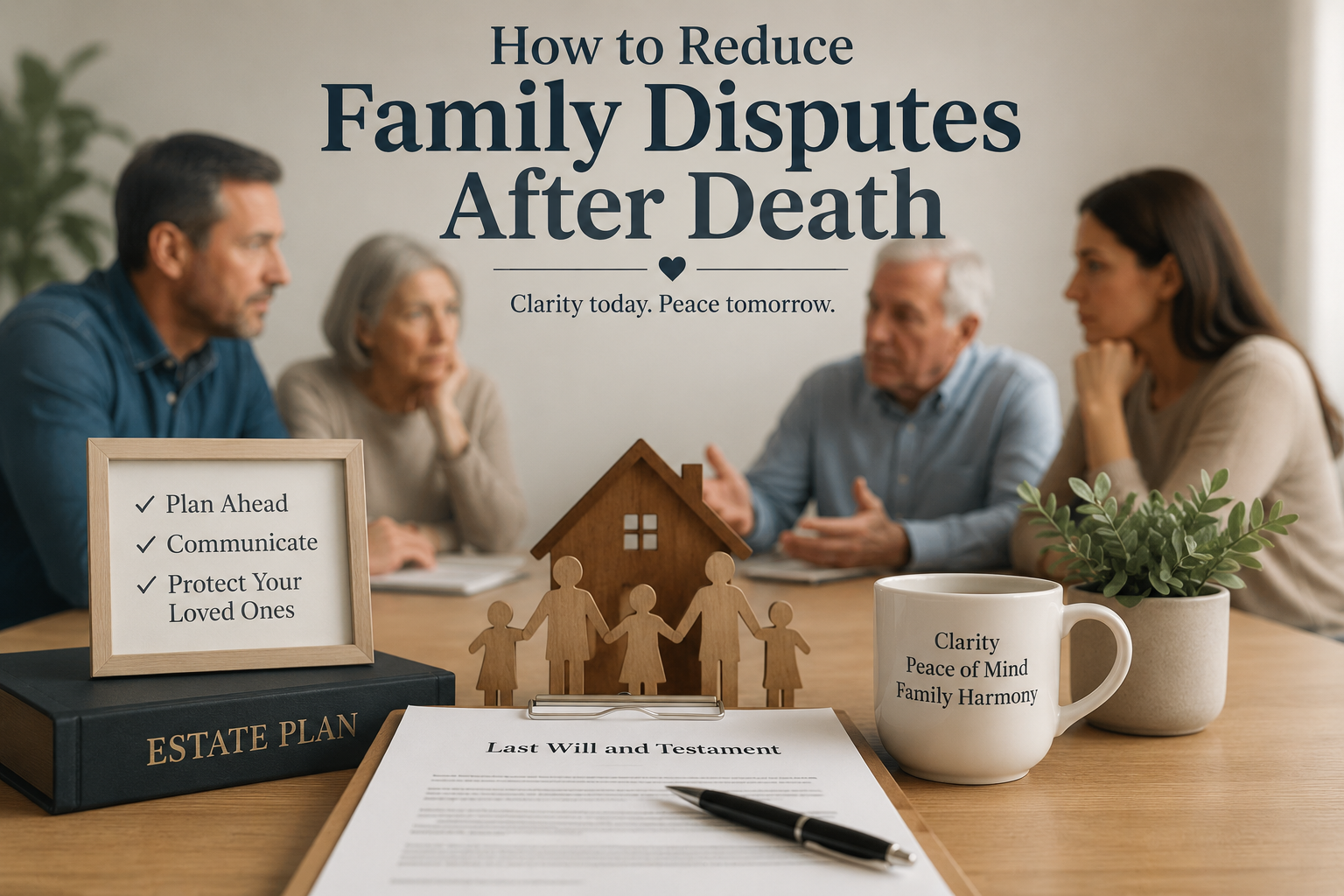
Losing a loved one is already emotionally difficult. Unfortunately, disagreements over money, property, and inheritance can sometimes create lasting family conflict after someone passes away.
Many disputes happen not because families are greedy, but because important decisions were never clearly discussed or legally documented.
The good news is that careful estate planning can greatly reduce the risk of misunderstandings and disagreements.
Why Family Disputes Happen

Family disputes after death often arise because of:
- No valid Will
- Unclear instructions
- Unequal inheritance expectations
- Confusion about assets
- Verbal promises that were never documented
- Concerns about fairness or influence
Even close families can face tension when emotions and finances collide.
The Importance of Having a Valid Will
One of the most effective ways to reduce disputes is by creating a clear and legally valid Will.
A Will allows you to:
- Decide who inherits your assets
- Name guardians for children
- Appoint executors you trust
- Leave specific gifts or instructions
- Reduce uncertainty for your loved ones
Without a Will, your estate will be distributed according to UK intestacy rules, which may not reflect your personal wishes.
Communicate Your Wishes Early
Many conflicts happen because family members are surprised by decisions after someone dies.
While you are not required to share every detail of your estate plan, open communication can help avoid confusion later.
Talking honestly about:
- Your intentions
- Care arrangements
- Financial decisions
- Personal belongings
can help manage expectations and reduce misunderstandings.
Keep Your Documents Updated

Life changes quickly. Marriage, divorce, children, property purchases, or business changes can affect your estate plan.
Review your:
- Will
- Lasting Power of Attorney
- Beneficiary designations
- Trust arrangements
regularly to ensure everything still reflects your wishes.
Outdated documents can create confusion and increase the risk of disputes.
Choose Executors Carefully
Your executor is responsible for carrying out your wishes and managing your estate.
Choose someone who is:
- Responsible
- Organised
- Trustworthy
- Able to remain calm during emotional situations
In some cases, appointing a professional executor may help reduce family tension.
Consider a Lasting Power of Attorney
A Lasting Power of Attorney (LPA) can also help prevent disagreements while you are still alive if you lose mental capacity.
An LPA allows trusted people to make decisions about:
- Finances
- Property
- Health and care
This reduces uncertainty and helps families avoid conflict during stressful situations.
Be Clear About Personal Items

Sometimes family disputes are not about money at all.
Personal belongings such as jewellery, photographs, or sentimental items can hold deep emotional value.
Including clear instructions for these items in your Will or a written letter of wishes can help avoid arguments later.
Professional Estate Planning Matters
Working with experienced estate planning professionals ensures your documents are:
- Legally valid
- Properly structured
- Clearly written
- Suitable for your circumstances
Professional guidance can help identify potential issues before they become family problems.
Final Thoughts
You cannot control every emotion after you pass away, but you can make things much easier for the people you love.
Clear planning, honest communication, and legally prepared documents can reduce stress, confusion, and conflict during an already difficult time.
Protecting your family is not only about what you leave behind — it’s also about leaving clarity, peace, and guidance when they need it most.